
An Introduction
and a Franciscan Canticle

It’s been thirty years since the Timpanogos re-emerged into public view. Fourteen since they built their website. Only in the last five or so have select members of the dominant culture begun to take notice. The Timpanogos have long faced significant resistance in their quest to be heard, and yet somehow, after all this time, the dam has ruptured and a little water is getting through. That’s not to say that the future will be without obstacles.
One of the major challenges, from my perspective, is that this water has nowhere to go. It’s rare, even amongst those with the best intentions, for outsiders to have the emotional capacity necessary to hold what the Timpanogos are telling us. Popular social justice mores might shame white people for this cultural-level avoidance, or highlight the privileges associated with being able to turn a blind eye on the Timpanogos and their plight, but I think there’s more at play here.
It is a poverty, not a privilege, that reveals itself when a human being lacks the basic emotional capacity to sit with the difficulties that attend being alive. Let me be clear—Mormon theology is no friend to grief, neither is it a friend to consensual reality. People who are raised in the Church of Jesus Christ of Latter-day Saints (I am writing to you as one such person) are actively taught to neglect the aspects of the human experience that are most mired in trouble. Despair, fear, injustice, betrayal, violence—all of these will be resolved by some coming savior in some coming future. That’s the dogma.
Organizing one’s inner life in this manner is packaged as faithful, but it is actually a sign of emotional and spiritual atrophy. This method of living produces human beings who are unable to dance with grief, and thereby unable to dance with joy. Because many such people also struggle to entertain narratives that run counter to the Church’s truth claims, great psychological fallout can occur when they finally do come up against reality.
Call that privilege if you will, but to me this is a tremendous poverty. All of it certainly prevents many good souls from stepping into the fray with the Timpanogos. Hence, this collection of essays.
Thanks to the rapidly churning encyclopedia that is the internet, at any given moment you are only a few keystrokes away from most of what you’ll read here about Timpanogos history. What you won’t find so easily is the structure. I’ve designed these essays with something called vesseling in mind. Vesseling is a term put into the world by grief teacher, Francis Weller.1 It refers to the slow process of building one’s capacity to hold difficult emotions without collapsing or running from them.
When I first heard what you’ll be reading here, I was utterly bowled over by it. So, while writing these essays I tried to remember the girl I was the first time I met Mary Murdock Meyer, my cousin and the current chief executive of the Timpanogos Nation. I tried to send the wisdom I’ve gathered back in time to that girl, in the hopes that good hearted people who read along now will be fortified by my commentary, and by the structure I’m employing here. I’m hopeful, too, that the pace at which I publish these essays will support the slow, necessary work of vesseling.
Even after reading all of this there will be some readers who will not move forward, for fear that the information they encounter here could challenge their faith. To these people I’d like to ask—is it your faith you fear losing, or is it something else?
What is faith if it is not the compassionate response to a suffering world? What is faith if it is not clear sight into the heart of the matter, a vision for a better future for your corner of humanity, and then a choice to lean into the space between and lay a foundation for those to come?
The Canticle of Brother Sun and Sister Moon
Most High, all-powerful, all-good Lord,
all praise is yours, all glory, all honor, and all blessings.
To you alone, Most High, do they belong,
and no mortal lips are worthy to pronounce your name.
Praised be you my Lord,
with all your creatures,
Especially Sir Brother Sun,
Who is the day through whom you give us light
and he is beautiful and radiant with great splendor,
of you Most High, he bears the likeness.
Praised be you, my Lord,
through Sister Moon and the stars,
In the heavens you have made them
bright, precious and fair.
Praised be you, my Lord,
through Brothers Wind and Air,
and fair and stormy, all weather’s moods,
by which you cherish all that you have made.
Praised be you my Lord,
through Sister Water,
so useful, humble, precious and pure.
Praised be you my Lord,
through Brother Fire,
through whom you light the night,
and he is beautiful and playful and robust and strong.
Praised be you my Lord,
through our Sister, Mother Earth
Who sustains and governs us,
Producing varied fruits
with colored flowers and herbs.
Praise be you my Lord,
through those who grant pardon for love of you
and bear sickness and trial.
Blessed are those who endure in peace,
by you, Most High, they will be crowned.
Praised be you my Lord,
through Sister Death,
From whom no-one living can escape.
Woe to those who die in mortal sin!
Blessed are they She finds doing your will.
No second death can do them harm.
Praise and bless my Lord and give him thanks,
And serve him with great humility.
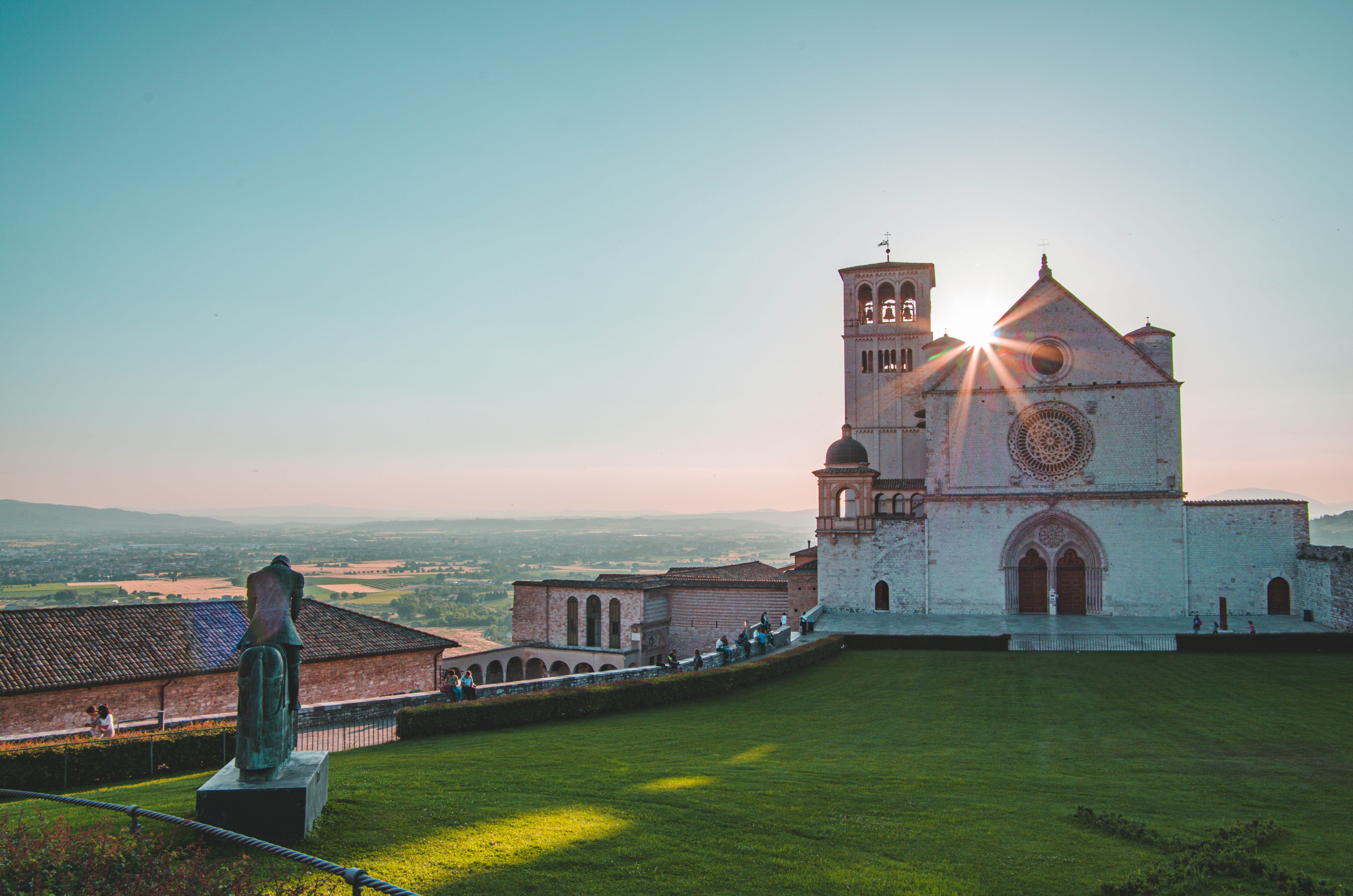
The author of this 13th century poem, Saint Francis of Assisi, has been recognized by the modern Catholic papacy as the patron saint of the environment, animals, and action. When I first read his canticle, I was struck by how indigenous it seemed to me. I hadn’t seen anything like this in my readings of Mormon theology. Saint Francis refers to the workings of creation as siblings, friends, kin. Even Sister Death is given a place of honor.
The way that Saint Francis sings his praises over creation resonates in my heart, and it opens up a space for me to consider that, despite the color of my skin, and the dogma I was born into, I too might be able to live a life in devotion to Creation. I too might be able to find a center of faith that is generative, not destructive. From what I’ve gathered, Saint Francis was quite a renegade in his time. Religious institutions might get it wrong repeatedly, but individual hearts? That’s a different matter.
Faith is not inherited prejudice. It’s not bias. It’s not fealty to falsified history or power-hoarding institutions. Faith is not fantasy. Faith is not a wall built to keep grief out. Faith is not a narrative you’re clinging to, nor is it a worldview.
Yes, you stand to lose much when you lean in, when you choose to really hear what the Timpanogos are telling us. This I can tell you, after having walked this path for nearly a decade—there is redemption in the loss. So, let’s bring the best of our heritage and our faith to bear here, and let’s wade in.
Questions for Reflection
As you sit here at this threshold, preparing to deepen your understanding around erased, tragic history in Utah, what’s running through your mind? How is your body responding to this introduction? Do you notice places of tension, places where your soma might be seizing up to protect itself from these ideas?
If you did carry fear about deepening your learning, what would that fear be about? Can you find a way to pause and lovingly address any resistance that might be coming up for you at this moment?
Thank you for reading. If this essay was meaningful to you, please consider supporting the Timpanogos tribe with a donation through their website. Utah residents, descendants of Mormon pioneers, or other interested parties can also sign a petition asking Governor Spencer Cox to rescind Brigham Young’s 1850 extermination orders against the Timpanogos.
Weller, Francis. (2015) The Wild Edge of Sorrow: Rituals of Renewal and the Sacred Work of Grief. North Atlantic Books: Berkeley, CA. Page 148.