
A Conclusion
On the Banks of the River of Time

“In this world, time is probably riverbourne, or riverine. Or a river is time murmuring its song, willing it seems, to be overheard. And there are a few salient mysteries to drape the notion across. You could decide that the river of time has a clear beginning, and you could say so. But you won’t find it. You won’t even find your beginning. You’ll find headwaters, but they are places where the beginning has already begun. Headwaters are gatherings.”1
-Stephen Jenkinson

As we come to the end of our time together, I’d like to invoke our beginning. The Timpanogos are relatives of the Nahua (Aztec) peoples. Timpanogos, which translates to “rock water carriers,” refers to the salt roads their nation traversed southward to Nahua lands many years ago. Remember?
The Timpanogos have been telling stories about these trade routes for hundreds of years. Long ago, they also recorded their stories on rock faces. Their Nahua cousins’ system was slightly more complex. They archived their glyphs on bark paper, and sometimes deer skin. The Spanish conquistadors who came to Mexico destroyed libraries worth of pictographic writings. The Nahuatl codices that survived give us a fascinating, if reduced peek into this old, indigenous culture.
In an effort to temper what can be a very bleak history with some beauty, I opened this series with a devotional poem written by Saint Francis of Assisi. I’d like to book end that piece with teachings that come from the other approximate group represented in the history we’ve been learning about. What follows are wisdom artifacts from two streams that come out of the Nahua tradition. The first is a stirring prayer for intergenerational healing. David Bowles, a Mexican-American professor who researches Mexican folklore, says that as far as he can tell it doesn’t come from any ancient source, but it was most likely composed in recent years.2
I release my parents from the feeling that they have already failed me.
I release my children from the need to bring pride to me; that they may write their own ways according to their hearts that whisper all the time in their ears.
I release my partner from the obligation to complete myself. I do not lack anything, I learn with all beings all the time.
I thank my grandparents and forefathers who have gathered so that I can breathe life today.
I release them from past failures and unfulfilled desires, aware that they have done their best to resolve their situations within the consciousness they had at that moment.
I honor you, I love you, and I recognize you as innocent.
I am transparent before your eyes, so they know that I do not hide or owe anything other than being true to myself and to my very existence, that walking with the wisdom of the heart, I am aware that I fulfill my life project, free from invisible and visible family loyalties that might disturb my peace and happiness, which are my only responsibilities.
I renounce the role of savior, of being one who unites or fulfills the expectations of others.
Learning through, and only through, love, I bless my essence, my way of expressing, even though somebody may not understand me.
I understand myself, because I alone have lived and experienced my history; because I know myself, I know who I am, what I feel, what I do and why I do it.
I respect and approve of myself.
I honor the Divinity in me and in you.
We are free.
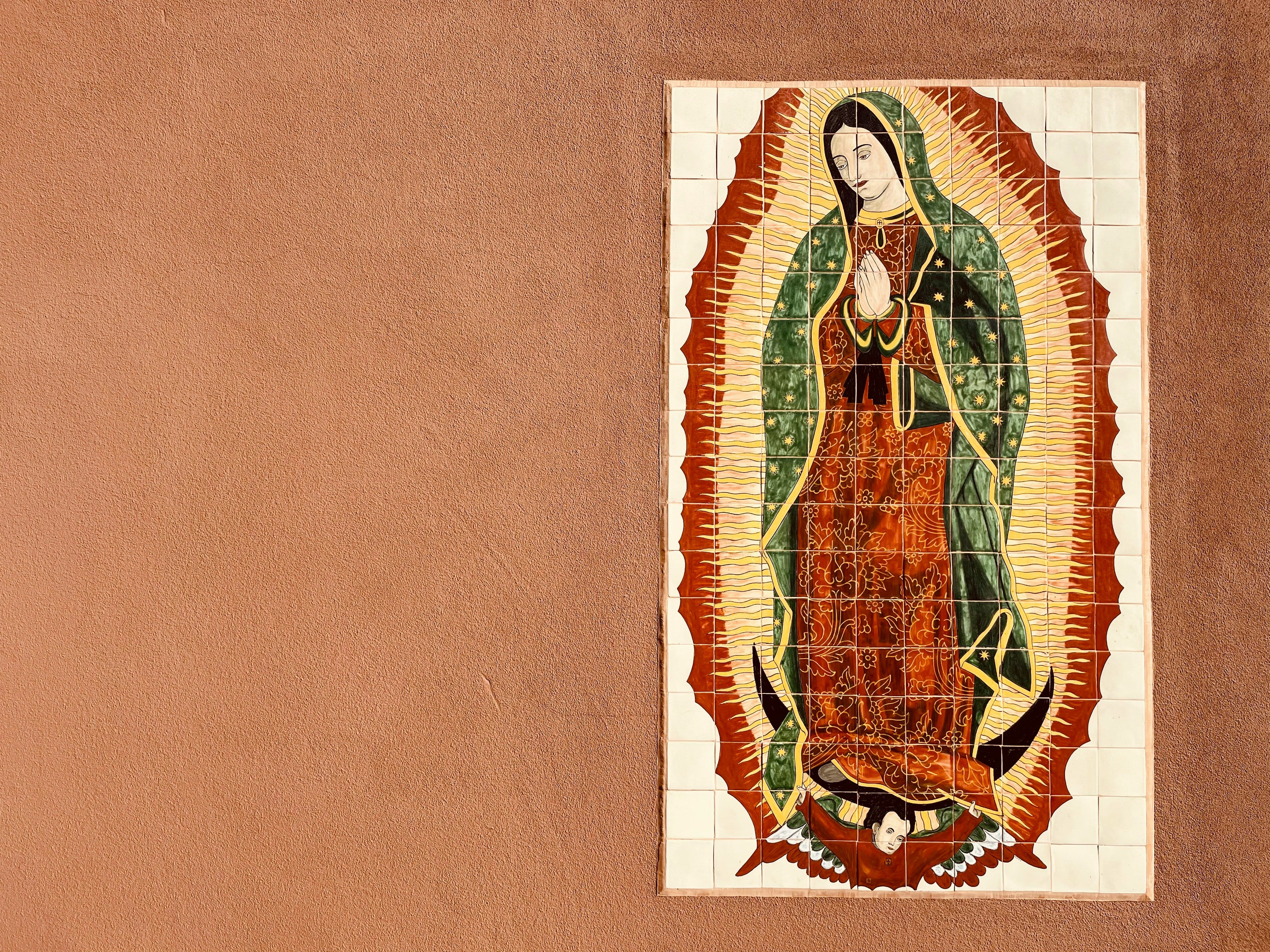
Our second wisdom teaching comes from a Nahua curandera. Because of her writings, Dr. Clarissa Pinkola Estés is perhaps the most well-known curandera (a traditional Nahua healer and spiritual leader) in the West. She is a devotee of Our Lady of Guadalupe, in particular Tonāntzin, the Nahua mother goddess who is half of the syncretic blend that is Our Lady of Guadalupe. Guadalupe means “river wolf.”
I can’t help but wonder if that devotion isn’t at the foundation of Dr. Estés’ most famous work, Women Who Run with the Wolves. Dr. Estés writes fiercely in protection of the holy, the innocent, and the feminine. Here is an excerpt from her book which I feel offers an essential counter-balance to the stirring prayer above:
“While much psychology emphasizes the familial causes of angst in humans, the cultural component carries as much weight, for culture is the family of the family... If the culture is a healer, the families learn how to heal; they will struggle less, be more reparative, far less wounding, far more graceful and loving. In a culture where the predator rules, all new life needing to be born, all old life needing to be gone, is unable to move and the soul-lives of its citizenry are paralyzed with both fear and spiritual famine.”3
It may be true that humans are usually doing the best they can. Some of our ancestors must have sheltered innocence inside of them as they moved through the world. Some would have been unconsciously caught up in cycles of harm, replicating them on autopilot. This cannot always be true of human nature, though.
Every cultural group has its predators. Many families do too. How can we expect reconciliation and forgiveness to come if we cannot acknowledge this reality and seek to contain it? Liberation cannot appear without reckoning.
To remediate these legacies we must disentangle our identities from whichever predators have embedded themselves in our inheritances. Lineages made of family, and those made of spirit must be similarly renewed and cleansed. We must reclaim our innocence, shed our fear, and integrate the truth of what has been done. This is a process which includes working with our grief and our anger, yes. Both of these Nahua teachings seem to think it may also be supported by prayer.
If you followed these wisdom teachings about ancestral healing and tracking the predator backward along the river of time, you would find that they flow out of the same headwaters as the Timpanogos Nation’s. Remembering this gives me comfort when I imagine what may be possible for their people in terms of future cultural restoration and healing.
But what will be possible for our people?
There’s an old expression about how water seeks its own level. I don’t know what’s ahead for us, but I know a lot about what is behind us. If the future were to include better relations between the Mormons and the Timpanogos, it would require that we track the river of time way far back. Past modernity, past the horrors of the nineteenth century, across the Atlantic Ocean, and back to the eras in which our people lived on their motherlands.
People who have been as stripped of the lifeblood of their own human ancestry as we have been are not the most suited to support native peoples in cultural restoration. Though it might break our hearts to do it, we have to find our own headwaters. We have to remember what it was like, long ago, when our ancestors walked softly on the green moss that bordered the rocky river as though, like the humus and the rushing water beneath their feet, they too belonged here.
Thank you for reading. If this essay was meaningful to you, please consider supporting the Timpanogos tribe with a donation through their website. Utah residents, descendants of Mormon pioneers, or other interested parties can also sign a petition asking Governor Spencer Cox to rescind Brigham Young’s 1850 extermination orders against the Timpanogos.
Jenkinson, Stephen. Come of Age: The Case for Elderhood in a Time of Trouble. North Atlantic Books, 2018.
Estés, Clarissa Pinkola. Women Who Run with the Wolves: Myths and Stories of the Wild Woman Archetype. Ballantine Books. New York, NY. 1992. Page 64.